
Aluminum Windows Explained: How Global Buyers Choose the Right System for Different Markets
Key Aluminum Window Specifications That Truly Matter to Buyers Many buyers assume that thicker aluminum profiles automatically mean better quality. In reality, performance depends on system design, not just profile thickness. Profile Structure and Alloy Selection From a manufacturing standpoint, commonly used alloys such as 6063-T5 or 6063-T6 offer a balance between strength, corrosion resistance, and surface finish quality. However, alloy choice alone does not define window performance.
1/20/20263 min read

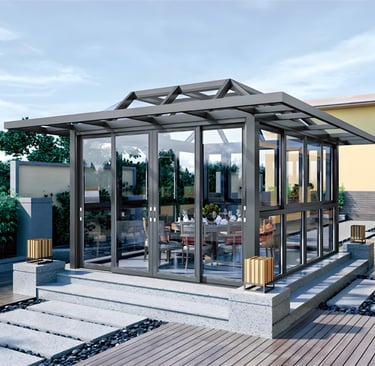
Understanding Why Aluminum Windows Are Searched Differently Around the World
When international buyers search for aluminum windows, they are rarely looking for a generic product. In practice, search intent varies significantly by region, climate, building standards, and application scenarios.
For example, buyers in Europe often focus on thermal performance and compliance with EN standards, while those in the Middle East prioritize structural strength, heat resistance, and large opening designs. In North America, common searches relate to energy efficiency ratings, impact resistance, and ASTM compliance.
From a manufacturing and export perspective, understanding these regional search behaviors is the first step toward selecting the right aluminum window system—and avoiding costly mistakes later in the project.
Real-World Buyer Challenges We Commonly See in International Projects
In export-oriented aluminum window supply, one recurring issue is misaligned expectations between buyers and actual performance requirements.
In a recent multi-unit residential project targeting a tropical Southeast Asian market, the buyer initially selected aluminum sliding windows purely based on price. However, after installation, residents began reporting water leakage during heavy rain and poor sound insulation.
The issue was not the aluminum material itself, but rather:
Inadequate drainage design
Incorrect sealing configuration for monsoon conditions
Profile selection that did not match local wind load requirements
These are common challenges we observe when aluminum window systems are selected without fully considering regional environmental conditions and building usage scenarios.
Key Aluminum Window Specifications That Truly Matter to Buyers
Many buyers assume that thicker aluminum profiles automatically mean better quality. In reality, performance depends on system design, not just profile thickness.
Profile Structure and Alloy Selection
From a manufacturing standpoint, commonly used alloys such as 6063-T5 or 6063-T6 offer a balance between strength, corrosion resistance, and surface finish quality. However, alloy choice alone does not define window performance.
Thermal Performance and Standards
In regions with strong energy efficiency requirements, thermal performance is measured using standards such as:
EN 14351-1 (Europe)
ISO 10077 (U-value calculation)
ASTM standards for North America
Thermal break design plays a critical role in determining the final Uw value of an aluminum window system. Buyers targeting European markets should be aware that non-thermal aluminum systems are often unsuitable for residential use due to strict insulation regulations.
How Regional Climate Shapes Aluminum Window Design Choices
Europe: Energy Efficiency Comes First
European buyers frequently search for:
“thermal break aluminum windows”
“low U-value aluminum window systems”
“EN certified aluminum windows”
In these markets, aluminum windows must meet stringent energy performance and air-tightness requirements. Multi-chamber thermal breaks, triple glazing options, and precision sealing systems are often standard expectations rather than upgrades.
Middle East: Heat Resistance and Structural Stability
In Middle Eastern markets, aluminum windows are commonly used in large openings, curtain walls, and villas. Buyers typically focus on:
Resistance to high temperatures
Structural strength for oversized panels
Compatibility with laminated or solar-control glass
Here, aluminum is preferred over PVC due to its dimensional stability under extreme heat.
North America: Compliance and Performance Balance
Buyers in the U.S. and Canada often search for aluminum windows that comply with ASTM performance standards, including air infiltration, water penetration, and impact resistance. Energy efficiency remains important, but durability and compliance documentation play a major role in purchasing decisions.
Common Buyer Misconceptions That Lead to Costly Mistakes
One of the most frequent misconceptions we encounter is the belief that all aluminum windows are suitable for all climates.
In cold regions, non-thermal aluminum windows can lead to:
Severe condensation
Heat loss
Higher energy bills
In coastal environments, insufficient surface treatment may result in premature corrosion, even when high-quality aluminum is used.
From a supplier’s perspective, clarifying these limitations early helps buyers avoid rework, complaints, and long-term maintenance issues.
Manufacturing Perspective: What Buyers Should Ask Before Placing an Order
Based on years of supplying aluminum window systems to different international markets, buyers should always clarify the following before finalizing specifications:
Which standards does the system comply with?
Is the window designed for local wind load and climate conditions?
What sealing and drainage solutions are included?
Has the system been tested or applied in similar projects?
These questions are far more important than focusing solely on profile thickness or visual appearance.
Aluminum Windows vs Other Materials: A Balanced View
Compared to PVC or wooden windows, aluminum systems offer:
Superior structural strength
Slimmer frame designs
Long-term dimensional stability
However, aluminum windows require proper system design to achieve comparable thermal performance. Buyers should be cautious of low-cost solutions that compromise insulation or sealing quality.
Providing a transparent comparison helps buyers make informed decisions rather than choosing based on price alone.
Final Thoughts: Choosing Aluminum Windows with Confidence
For global buyers, aluminum windows are not a one-size-fits-all product. Successful projects start with understanding regional requirements, real usage scenarios, and verified performance standards.
From a manufacturer and exporter’s perspective, the best aluminum window solutions are those designed around how buildings are actually used, not just how products are marketed.
By aligning product selection with climate, standards, and application needs, buyers can ensure long-term performance, compliance, and satisfaction—regardless of the market they serve.
Get in Touch With Us
Partner with QTA Aluminium for wholesale and OEM door & window solutions. Contact us directly to discuss your project needs.
© 2025. All rights reserved.